
Thinking of replacing your home’s front door? It’s important that you carefully weigh up your options - the type of front door you choose can affect your home’s curb appeal, security, privacy and even its energy-efficiency. Below we’ll take a walk through some of the most important considerations when buying a new front door to help you create the perfect entryway to your home.
Size
First, it’s important to consider what size door you need. The most common front door size in the US is 36 inches wide x 80 inches tall, but newer constructions more commonly have doors that are 96 inches tall and sometimes 45 inches wide.
Thickness can also vary. Most classic doors are 1 3⁄4 inches thick to provide optimum thickness without being too heavy, but some high end doors exceed to 2 ¼ inches thick.
Unless you’re willing to alter the size of your doorway, it’s best to stick with a door that is the same size as your current one. Take your time to carefully measure the dimensions of your current door and then start shopping around.
Material
Front doors come in an array of different materials. However, some of the most popular materials are:
Timber
Timber front doors are prized for their timeless elegance and can make great options on a traditional or rustic home. They provide a high level of insulation and can add a lot of value to a home. While there are many off-the-shelf options, companies like Delta Doors can help you consider hand-crafted options for full customization.
Metal
Materials like steel and aluminium offer some of the best security and can withstand harsh weather conditions. They can also be more affordable than timber doors while requiring less upkeep. Solid metal doors may not offer much insulation, however foam-filled metal doors can be quite energy-efficient.
Vinyl
Vinyl is the most budget-friendly option you can choose. This material is also a great insulator and virtually zero-maintenance (unlike timber which needs to be sealed to protect it against insect damage and rot, and metal which may need occasional refinishing to prevent rust). Just be wary that vinyl doors may experience fading over time.
Composite
Composite doors use a mix of materials (usually a core made from timber, reinforcements made from steel and an outer casing made from fiberglass or vinyl). This gives them superior insulation qualities and excellent security. They can be pricier than other doors however.
To choose the right material, determine what is more important to you: aesthetics (timber), security (metal), affordability (vinyl) or energy-efficiency (composite)?
Color
Next, think about the color. Different tones will create different impressions and some may work better with certain properties. You could consider:
- Neutrals: Blacks, white and grays provide a minimal look that works on most properties - particularly modern properties.
- Earth colors: The likes of brown, olive and sage can have a calming organic look that is excellent for country cottages.
- Pastels: Pastel colors like chartwell green, duck egg blue and lavender can also suit rustic properties and are very popular on coastal homes.
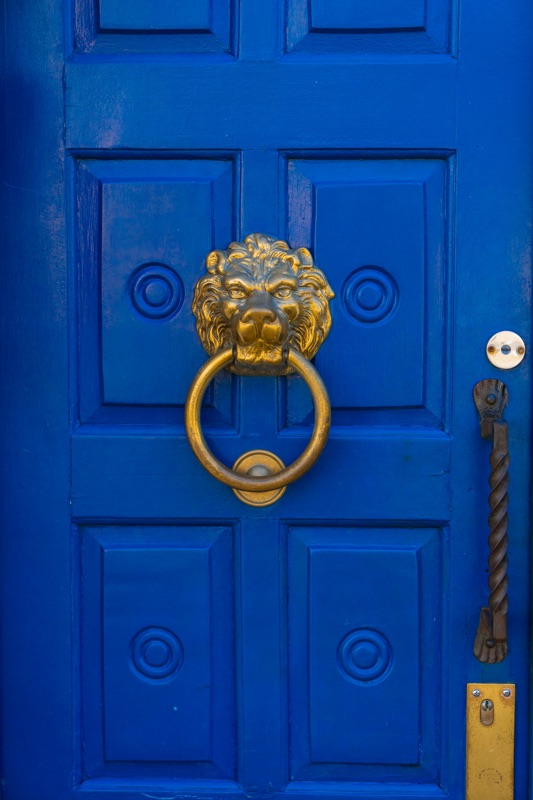
- Deep colors: Navy blue, burgundy and forest green have a sophisticated and traditional look that works well on period properties.
- Bright colors: The likes of rich red, hot pink, lime green and vibrant yellow will make your front door pop! Choose these bold colors to contrast neutral colored siding and create a sense of fun energy.
With vinyl and composite doors, the color is usually infused into the plastic itself, whereas timber and metal doors can be sanded down and repainted. You can also leave timber and metal doors unfinished to show off the wood grain or metallic finish.
Style
Beyond the material and the color, you also need to consider the style. There are countless looks to choose from, but some of the most common are:
- Flush: These consist of a completely smooth slab for a modern and minimal aesthetic.
- Panel: These doors suit older homes better - they consist of various different moulded panels to provide a more textured and ornate look.
- Glazed: Glazed doors contain glass panels to let in light. This glass is usually tempered to keep it secure, and frosted or distorted to provide privacy.
Try to find a style that matches the rest of your home, while balancing this against the material and color - a contemporary-styled door on an older home might look out of place, however by choosing a material like wood and deep colors, you could still make it work.
Lock
Most modern doors will come fitted with very secure locks. That said, it may still be worth considering the type of look.
Mortice deadlocks are found on most timber and metal doors and use a single deadbolt to keep the door locked. Multi-point locking systems contrastingly have multiple bolts running up the height of the door for extra security and are common on vinyl and composite doors.
Most doors have to be manually locked when closed, but some have night latches which allow them to automatically lock when closed - this means you won’t have to remember to lock up each time, however you will always need to bring your keys out with you.
Some modern doors come with smart locks which open using biometrics or an app on a phone. These are very secure, but more expensive and more tricky to fix if they malfunction.
Hardware
Finally, it could be worth considering some of the extra hardware that you want on your door.
Start by considering whether you want a handle or a knob. Handles tend to provide a better grip and may be easier to operate if you have a disability, while knobs can have a more traditional and decorative look.
You should then consider whether you want your door to have a knocker. These can come in all kinds of decorative styles and can often be charming features on more vintage style doors.
A mail slot could also be necessary if you don’t have an exterior mailbox. Choose a mail slot with a flap and brush strip to prevent drafts coming in.
Peepholes can be an extra classic security feature to consider. Some modern smart doors may have in-built cameras fitted instead, although you can always buy a separate video doorbell as an alternative solution.